How to Teach Kids to Share: 5 Proven Strategies That Work
Discover 5 proven strategies to teach kids to share, fostering empathy, cooperation, and essential social skills. Learn why sharing is challenging for young children and how Nami Kids supports this vital developmental journey.
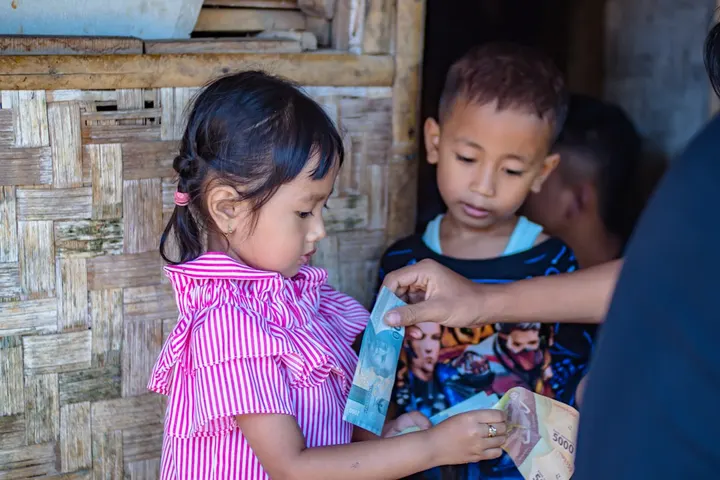
Picture this: you’re at the park, your child is engrossed in playing with a beloved toy, when another child approaches, wanting a turn. Suddenly, the air is thick with tension, a tight grip on the toy, and a resounding “Mine!” escapes your little one’s lips. Or perhaps it’s a sibling squabble at home, a battle over the last biscuit or the most coveted building block. As parents, these moments can feel incredibly frustrating, leaving us wondering, how to teach kids to share: 5 proven strategies that work to navigate these common childhood dilemmas?
Teaching children to share is one of the most fundamental, yet often challenging, lessons in early childhood development. It’s not just about handing over a toy; it’s about fostering empathy, understanding social cues, and learning the invaluable art of cooperation. While it might seem like a simple concept to adults, for a developing child, sharing involves a complex interplay of cognitive and emotional skills that take time and patience to cultivate. This article will delve into the developmental stages of sharing, explore why it's so important for a child's growth, and provide you with actionable, gentle strategies to guide your children towards becoming generous and considerate individuals.
We understand the daily struggles and the desire to raise kind, well-adjusted children. This comprehensive guide aims to equip you with the knowledge and tools to transform those challenging sharing moments into opportunities for profound learning and connection, ensuring your child develops essential social skills that will benefit them throughout their lives.
The Developmental Journey of Sharing: Why It's So Challenging
The journey to genuine sharing is not a straight line; it's a winding path filled with developmental milestones and cognitive leaps. Many parents expect their toddlers to share instinctively, leading to frustration when faced with resistance. However, understanding the underlying reasons for a child's reluctance to share can shift our perspective from exasperation to empathy, allowing us to support them more effectively.
Understanding the "Mine!" Phase: Toddler Egocentrism
For children under the age of three, the concept of sharing is often beyond their developmental grasp. This isn't due to selfishness, but rather a natural stage known as egocentrism. Young toddlers genuinely believe the world revolves around them, and their desires are paramount. They lack what psychologists call 'theory of mind' – the ability to understand that others have different thoughts, feelings, and perspectives than their own. When another child wants their toy, they don't necessarily comprehend the other child's desire or distress; they only know that their possession is being threatened.
Furthermore, their understanding of time is still developing. When asked to share a toy, a young child might perceive it as giving it away forever, rather than lending it for a short period and getting it back. This fear of permanent loss can trigger strong emotional reactions, making them cling to their belongings even more tightly. Research, such as the study reported by Hannah Devlin, science editor of the Times, highlights that children are more likely to share when they do so voluntarily, suggesting that forced sharing can bypass the crucial development of empathy and instead teach mere obedience.
The Cognitive Hurdles: Self-Regulation and Empathy
Sharing is a complex social action that demands several advanced cognitive and emotional skills. It requires self-regulation – the ability to manage one's impulses and delay gratification. A child must be able to override their immediate desire to keep a toy and instead consider the feelings of another. This impulse control is a skill that matures gradually throughout early childhood.
Empathy, the capacity to understand or feel what another person is experiencing, is also a cornerstone of genuine sharing. While rudimentary forms of empathy can be observed in infants, the ability to truly put oneself in another's shoes and act on that understanding develops significantly around 3.5 to 4 years of age. Forcing a child to share before they've developed these capacities can be counterproductive. As pediatric psychologist Dr. Kate Eshleman notes, "I think it’s really important to encourage sharing and help kids understand why it’s important.” When children are simply told to share, they learn to follow a command, but they don't necessarily learn to connect with the other child's feelings or experience the intrinsic reward of generosity.
The Importance of Ownership and Security
Before a child can truly share, they often need to feel secure in their ownership. Their toys are an extension of themselves, especially in the toddler years. Taking a toy away from them, even with the intention of teaching sharing, can feel like a personal violation. This can lead to feelings of insecurity and a stronger possessiveness over their belongings. It's crucial for children to understand what belongs to them and that their cherished items are safe and will be returned.
Some toys hold particular sentimental value or are essential for a child's current play. Designating certain items as "special" or "not for sharing" can actually foster a greater willingness to share other items. When a child feels their boundaries are respected and their ownership is acknowledged, they are more likely to willingly engage in sharing when they are developmentally ready. This approach respects their autonomy and builds trust, which is foundational for all social learning.
Why Sharing is Important for a Child's Growth
Beyond resolving playground squabbles, the ability to share is a cornerstone of healthy social-emotional development. It lays the groundwork for successful relationships, effective communication, and a strong sense of community. Understanding why sharing is important for a child can motivate parents to approach this teaching moment with patience and intentionality.
Building Empathy and Social Connection
One of the most profound benefits of learning to share is its role in building empathy. When children share, they learn to consider the needs and feelings of others. They experience the joy of making someone else happy and witness the positive reactions their generosity elicits. This reciprocal interaction helps them understand that others have wants and needs just like them, fostering a deeper connection and understanding of the human experience. As children practice sharing, they develop a greater capacity for compassion and kindness, which are vital for forming meaningful friendships and navigating social situations.
Fostering Cooperation and Problem-Solving Skills
Sharing is rarely a simple act; it often involves negotiation, compromise, and creative problem-solving. When children learn to share, they are also learning to work together towards a common goal, whether it's building a tower with shared blocks or taking turns on a swing. These experiences teach them how to communicate their desires, listen to others, and find mutually agreeable solutions. These cooperative skills are not only essential for playtime but are also fundamental for success in school and future collaborative environments. The "5 importance of sharing in school" often includes teamwork, conflict resolution, and mutual respect, all of which stem from early sharing experiences.
Developing Emotional Resilience and Patience
Learning to share inevitably involves waiting, taking turns, and sometimes not getting exactly what one wants immediately. These moments are powerful opportunities for children to develop emotional regulation and patience. They learn to manage frustration, cope with disappointment, and understand the concept of delayed gratification. These are crucial life skills that build emotional resilience, helping children navigate challenges and setbacks with greater composure and adaptability. The ability to wait for a turn or compromise on a toy teaches them that not everything can be had instantly, a valuable lesson in a world of instant gratification.
Preparing for School and Beyond
The skills honed through sharing are directly transferable to the classroom and broader social settings. In a school environment, children are constantly asked to share resources, take turns, and collaborate with peers. "Teaching sharing in the classroom" is a common theme for educators, as it underpins a harmonious learning environment. Children who have a solid foundation in sharing are better equipped to make friends, participate in group activities, and resolve conflicts peacefully. These early experiences shape their social competence, influencing their ability to adapt to new situations, form positive relationships, and thrive in group dynamics throughout their lives.
How to Teach Kids to Share: 5 Proven Strategies That Work
Now that we understand the developmental nuances and profound importance of sharing, let's explore practical, gentle, and effective strategies that parents can implement to cultivate this vital skill in their children. These approaches focus on guiding rather than forcing, fostering genuine understanding and intrinsic motivation.
Strategy 1: Model Sharing and Generosity
Children are keen observers and imitators. One of the most powerful ways to teach sharing is to consistently model it in your own daily life. Share your snacks, offer a piece of your dessert, or let your child use your pen. Narrate your actions: "I'm sharing my apple with you because I know you like them," or "Here, you can use my marker for your drawing." This demonstrates sharing as a natural, positive part of interaction. When you show generosity and consideration, your child learns that sharing is a valuable and rewarding behavior. Integrate "Teach your child to share quotes" into your daily interactions by embodying the spirit of generosity, rather than just reciting maxims. For example, you might say, "Sharing makes everyone feel happy, doesn't it?" after offering a portion of your meal.
Extend this modeling to interactions with other adults and within the family. Let your child see you sharing tasks, resources, and even your time. When they witness sharing as a consistent and positive aspect of family life, it becomes a natural part of their understanding of how people interact. This consistent exposure to positive sharing behaviors creates a strong foundation for their own development.
Strategy 2: Emphasize Turn-Taking, Not Just "Sharing"
For younger children, the concept of "taking turns" is often much easier to grasp than the abstract idea of "sharing." Instead of demanding, "Share your toy!" try, "It's [Child A]'s turn with the truck, then it will be [Child B]'s turn." Use a timer to make turns concrete and predictable. A visual timer can be particularly helpful, allowing children to see how much time is left before their turn or before they need to hand over a toy. This approach teaches patience and the understanding that they will get the item back.
Introduce turn-taking in structured activities, like board games or simple play scenarios. "My turn to roll the dice, then your turn!" This builds a clear framework for how turns work and helps children internalize the rhythm of reciprocal play. By focusing on turn-taking, you are breaking down the complex skill of sharing into manageable, understandable steps, making it less intimidating for young minds. This strategy is especially effective for children who are not yet developmentally ready for the full concept of sharing, as highlighted by competitors.
Strategy 3: Respect Ownership and Special Toys
A crucial step in fostering a child's willingness to share is to respect their sense of ownership. Not every toy needs to be shared, especially those that are particularly cherished or new. Allow your child to designate certain items as "special toys" that are not for sharing when others are around. This teaches them about boundaries and gives them a sense of control over their possessions, which paradoxically can make them more willing to share other items.
Before playdates, discuss with your child which toys they are happy to share and which they'd prefer to keep for themselves. You can put the "special" toys away before guests arrive. Teach children to ask permission before taking another child's toy, and reinforce the idea that "No" means "No." This respect for personal property builds trust and security, making them feel more generous when it comes to items they are willing to share. This approach ensures that "My child can be supported for" their individual needs and feelings regarding their belongings.
Strategy 4: Facilitate Negotiation and Problem-Solving
Instead of immediately stepping in to dictate who gets what, empower your children to solve sharing conflicts themselves, with your guidance. Ask open-ended questions like, "What can we do so everyone gets a turn?" or "How can we both play with this?" Offer suggestions if they get stuck, such as, "Maybe one of you can use the red blocks, and the other can use the blue blocks, and then you can swap?"
This approach teaches valuable negotiation skills and helps children understand that there are multiple ways to resolve a conflict. It moves beyond simple obedience to active participation in finding fair solutions. Encourage them to use their words to express their feelings and desires, and praise their efforts to compromise, even if the solution isn't perfect. This process builds their confidence in managing social interactions independently, preparing them for more complex social dynamics in school and beyond.
Strategy 5: Praise Effort and Positive Sharing Behaviors
Positive reinforcement is incredibly powerful. When you see your child attempting to share, taking turns, or even just expressing a willingness to share, offer specific and genuine praise. Instead of a generic "Good sharing," try, "I noticed you let your friend have a turn with your favourite car, even though you really wanted to keep playing. That was very kind and thoughtful!" or "You waited so patiently for your turn on the swing, that shows great self-control!"
Focus on the effort and the positive impact of their actions. This helps children connect their behavior with positive feelings and outcomes, reinforcing the desire to share in the future. It also highlights the intrinsic rewards of generosity and cooperation, rather than making sharing feel like a chore. Celebrating small victories in sharing builds momentum and encourages continued growth in this essential social skill. Remember, consistency in praise and patience in teaching are key.
Nami Kids: Supporting Sharing and Social Skills in the Digital Age
In today's world, digital devices are an undeniable part of children's lives. While screens offer incredible learning opportunities, managing screen time effectively can also play a crucial, albeit indirect, role in fostering sharing and social skills. Nami Kids is designed to support parents in creating a balanced digital environment, which in turn opens up more opportunities for real-world interactions, shared play, and the development of vital social competencies.
Here's how Nami Kids can help:
- Narrative Pedagogical Pause: One of the biggest challenges with screen time is the difficulty children have transitioning away from devices, often leading to meltdowns or conflicts. Nami Kids' Narrative Pedagogical Pause feature helps children understand and accept screen time limits through engaging stories, rather than abrupt cut-offs. By making transitions smoother, it reduces frustration and frees up time for shared activities with siblings or friends, such as playing with physical toys, engaging in collaborative crafts, or simply having conversations. Less screen-related friction means more opportunities for practicing sharing and turn-taking in a calm, positive environment.
- Autonomy Routines: Nami Kids allows parents to set up flexible routines that empower children with a sense of control over their screen time within defined boundaries. This structured approach to device usage can indirectly teach children about turn-taking and fairness. For example, if a family has one tablet, Nami Kids can help manage who gets to use it and when, creating a clear "my turn, your turn" dynamic for digital resources. This fosters an understanding of shared resources and respectful usage, mirroring the principles of sharing physical toys. Learn more about how Nami Kids works and its features at namikids.app/come-funziona.
- Nami Parents Dashboard: The comprehensive Nami Parents Dashboard provides valuable insights into your child's screen time habits. By understanding how much time your child spends on devices and what content they engage with, you can make informed decisions to balance their digital world with real-world interactions. This insight allows you to intentionally create more moments for shared play, family activities, and social engagement, which are critical for developing sharing skills. It empowers you to guide your child towards a holistic development that includes both digital literacy and strong interpersonal skills.
For a deeper dive into our features and how they support your child's development, visit our comprehensive guide at namikids.app/guida. You can also explore our subscription options and pricing at namikids.app/prezzi.
By providing a framework for healthy screen time management, Nami Kids helps parents cultivate an environment rich in opportunities for children to practice sharing, empathy, and cooperation, ensuring they develop into well-rounded individuals ready for the complexities of social interaction.
- 🤝 Sharing is a developmental milestone, not just a command.
- ⏰ Emphasize turn-taking and respect ownership for genuine generosity.
- 💖 Model kindness and use positive reinforcement to build empathy.
Related articles
- TV at Breakfast: Finding Screen Balance in Your Child's Morning Routine
- Child Hits Others? 7 Strategies to Stop Aggression
- How to Reduce Screen Time Without Fights: Parent Guide
Frequently asked questions
1. What is the 3-3-3 rule for children?
The "3-3-3 rule" is not a universally recognized or standard parenting guideline in child development literature. While some specific contexts might use a "3-3-3 rule" (e.g., for puppy training or financial planning), in the realm of parenting, it doesn't have a widely accepted definition. However, if we were to interpret a similar concept for children, it might relate to structured engagement or screen time management. For instance, it could hypothetically suggest 3 minutes of focused attention, followed by 3 minutes of independent play, and then 3 minutes of shared activity to promote balanced interaction. In the context of screen time, a '3-3-3 rule' could be a personal family guideline, such as '3 hours maximum screen time per day, 3 feet distance from the screen, and 3 types of content (educational, creative, social).' The key is consistency and tailoring any such rule to your child's age and developmental needs, ensuring it supports healthy habits and allows for ample opportunities for social interaction and sharing.
2. What is the 7 7 7 rule for parenting?
Similar to the 3-3-3 rule, the "7-7-7 rule" is not a widely established or recognized parenting methodology within child psychology or educational frameworks. It is more commonly found in other domains, such as dating advice or business strategies. In parenting, effective strategies tend to focus on principles like consistency, positive reinforcement, clear communication, and age-appropriate expectations, rather than rigid numerical rules. For instance, consistent routines, predictable consequences, and regular quality time are far more impactful than an arbitrary numerical rule. Parents often find success by focusing on building a strong, empathetic relationship with their child, setting clear boundaries, and adapting their approach as the child grows and develops. The emphasis should always be on understanding your child's individual needs and fostering a supportive environment for their growth.
3. At what age should a child be taught to share?
Children begin to grasp the concept of sharing and turn-taking around 3.5 to 4 years of age, though early exposure to these ideas can start much sooner. Before this age, toddlers are typically in an egocentric phase, meaning they genuinely struggle with understanding another person's perspective or the concept of temporary ownership. While you can introduce simple turn-taking games and model sharing from a young age (1-2 years), expecting genuine, empathetic sharing before 3.5-4 years can lead to frustration for both parent and child. It's more effective to focus on respecting ownership, teaching turn-taking, and facilitating negotiation in the earlier years. As they approach preschool age, their cognitive and emotional development allows them to truly understand the give-and-take of sharing, making it the ideal time to actively teach and reinforce these skills with the strategies discussed in this article.
4. How to encourage children to share ideas?
Encouraging children to share ideas is crucial for their cognitive and social development, fostering creativity and communication. You can build your child's idea-sharing skills by creating a supportive and open environment. Firstly, actively listen to your child without interruption or judgment, showing genuine interest in their thoughts. Praise their efforts to express themselves, even if the idea seems unconventional, by saying things like, "That's a really interesting thought!" or "I love how you're thinking about that." Encourage fairness and explain about sharing ideas by emphasizing that everyone's contributions are valuable. Activities that involve collaborative thinking can help, such as choosing dress-ups together and discussing character ideas, or drawing a big picture together using the same packet of crayons, where each person contributes to the overall vision. During these activities, prompt them with questions like, "What do you think we should add next?" or "How could we make this even better?" This not only encourages them to voice their ideas but also teaches them to build upon others' suggestions, fostering a collaborative mindset.
5. What if my child consistently refuses to share despite all strategies?
If your child consistently refuses to share even after implementing these strategies, it's important to remain patient and consider underlying factors. First, ensure you're respecting their ownership of special toys and not forcing sharing before they're developmentally ready (typically around 3.5-4 years). If they are older, observe the specific situations where refusal occurs. Is it always with a particular toy, person, or environment? Sometimes, a child might be feeling insecure, overwhelmed, or simply tired. Revisit the strategies: reinforce turn-taking, model sharing more explicitly, and continue to praise any small attempts at generosity. You might also try role-playing sharing scenarios with puppets or dolls to help them practice in a low-pressure environment. If the refusal is accompanied by significant emotional distress, aggression, or impacts their ability to form friendships, consider consulting with a pediatrician or child development specialist who can offer personalized guidance and rule out any deeper developmental concerns.
Teaching children to share is a journey that requires patience, understanding, and consistent effort. By adopting these proven strategies, you're not just teaching them to hand over a toy; you're nurturing their capacity for empathy, cooperation, and resilience – qualities that will serve them well throughout their lives. Remember, every small step towards sharing is a significant leap in their social and emotional development.
For parents seeking to balance digital engagement with crucial real-world social development, Nami Kids offers a supportive framework. Explore how our features can help create a harmonious environment for your child's growth, fostering opportunities for them to practice sharing and build strong social skills. Visit namikids.app today to learn more and empower your child's journey towards becoming a compassionate and cooperative individual.
Foto di Misbahul Aulia su Unsplash.