Updated on 2 June 2026by Reviewed by Mirko Evangelisti
5 Mistakes Parents Make When a Child Refuses School
Discover the 5 most common mistakes parents make when their child refuses to go to school and how to avoid them to best support your child's well-being and educational journey. An empathetic, evidence-based guide for navigating one of the most delicate parenting challenges.
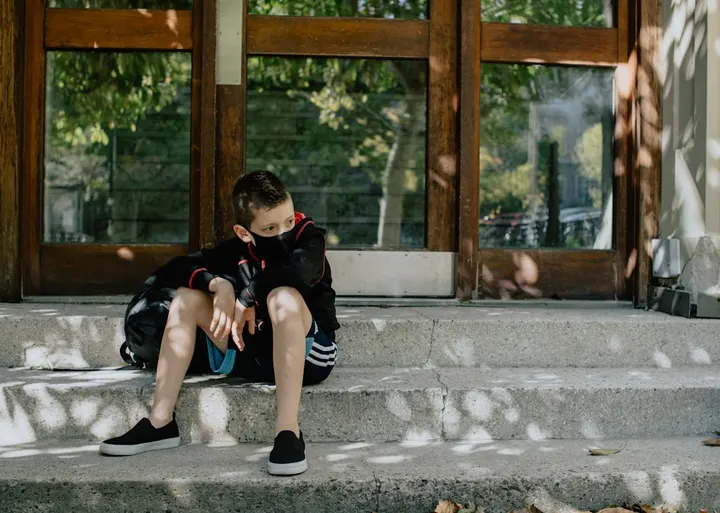
The alarm goes off, but your child refuses to get out of bed. The tears, the pleading, the sudden stomach aches become a morning routine. If you find yourself in this situation, know that you are not alone. School refusal is one of the most distressing challenges a parent can face, a warning sign pointing to a deep discomfort in the child or teenager. In moments like these, it is easy to feel frustrated, helpless, and even angry. Yet our reaction can make the difference between making things worse and finding a solution. That is why it is essential to be aware of the 5 critical mistakes parents make when their child refuses school, mistakes that, if avoided, can open the path to more effective, loving support.
Understanding the dynamics behind school refusal is the first step in helping our children overcome this obstacle. It is almost never about simple laziness or a tantrum, but a signal that something is wrong in their inner world or the environment around them. Throughout this complete guide, we will explore the deep causes of this behaviour, its consequences, what science tells us, and most importantly, which practical strategies we can adopt to support our children, avoiding the most common traps and learning to recognise when it is time to seek professional help.
Why It Happens: Understanding the Roots of School Refusal
School refusal, also known as school phobia or separation anxiety related to school, is a complex phenomenon that can appear at different ages and with varying intensity. It is not a monolithic behaviour but rather a symptom concealing a multitude of psychological, emotional, and sometimes physical causes. Understanding these roots is essential for targeted, effective intervention.Psychological and Developmental Causes
For younger children, the most common cause is often separation anxiety. After a long period at home, perhaps with a parent returning to work, the separation can be perceived as abandonment. This anxiety is normal in preschool years, but if it persists beyond a reasonable adjustment period, it may indicate a greater difficulty in separating from attachment figures, with the school environment seen as hostile or dangerous, as highlighted by child psychology research (Bowlby, 1969). As children grow, the motivations can evolve. Social anxiety becomes a significant factor. The fear of peer judgement, difficulty making friends, or being a victim of bullying can make school an extremely stressful place. A child who does not want to go to primary school may feel inadequate in social interactions or fear teasing, an experience that can have a devastating impact on self-esteem and the desire to attend school. Undiagnosed learning difficulties are another frequent cause. A child who struggles to read, write, or understand concepts despite their efforts can develop a sense of frustration and shame. School becomes a place where they feel constantly tested and failing, leading them to want to avoid it at all costs. This can also manifest in children who seem "lazy" but are actually struggling silently. In adolescence, the picture becomes even more complicated. Statements like "I don't want to go to school anymore" at 14 or 17 are often signals of an identity crisis, a search for autonomy, or a deeper distress. Academic pressure, social competition, relationship problems with peers or teachers, and difficulty finding meaning in studying can lead to profound demotivation. The psychology of the child who refuses school at this stage intertwines with typical adolescent challenges, including depression, generalised anxiety disorders, or in some cases, behavioural disorders such as Oppositional Defiant Disorder (ODD).Environmental and Family Factors
Beyond individual causes, context plays a crucial role. Significant family changes, such as a move, the birth of a sibling, parental separation, or a bereavement, can destabilise the child and manifest as school refusal. School, which should be a place of stability, is perceived as an additional source of stress or a place to flee from in order to remain in the family "nest," especially if the home environment is tense or conflict-ridden. The school environment itself can also be the source of the problem. A difficult classroom climate, unempathetic teachers, curricula perceived as boring or excessively demanding, or a lack of stimulation can contribute to refusal. The pandemic and remote learning, for example, intensified the sense of demotivation and disorientation in many young people, disrupting routines and social dynamics. The World Health Organization (WHO) has repeatedly underscored the increase in mental health problems among children and adolescents, with anxiety and depression often manifesting through somatic symptoms or refusal to participate in social and school activities. These data highlight the importance of not underestimating the distress and considering it a serious signal requiring attention and support.Consequences If You Do Not Intervene: Impact on the Child's and Teenager's Well-Being
Ignoring or minimising a child's school refusal can have significant and lasting repercussions on their psychological, social, and academic well-being. It is a situation that, if not addressed promptly and with the right sensitivity, can trigger a negative spiral that is difficult to break.Short-Term Impact
In the short term, school refusal inevitably leads to learning delays. Accumulated absences make it difficult to follow the curriculum, creating gaps that increase frustration and feelings of inadequacy in the child or teenager. This, in turn, can further fuel the desire to avoid school, creating a vicious cycle that worsens the academic situation. Emotionally, the distress intensifies. Social isolation, due to a lack of interaction with peers, can lead to feelings of loneliness, sadness, and anxiety. The child or teenager may develop a negative self-image, feeling "different" or "incapable." General mood worsens, with possible manifestations of irritability, apathy, or in more severe cases, obvious depressive symptoms. Parents often notice behavioural changes at home, with outbursts of anger or increasing self-withdrawal.Long-Term Impact
The long-term consequences are even more concerning. Prolonged school refusal drastically increases the risk of school dropout, compromising future educational and professional opportunities. Education is a fundamental pillar for personal development and social integration, and its interruption can severely limit life prospects. Socially, isolation can become chronic, making it difficult to build meaningful relationships in adulthood. Social skills, which are refined through daily peer interaction, are not adequately developed, leading to difficulties in future interpersonal and professional relationships. The lack of a structured educational path can also affect the ability to find fulfilling work and maintain financial stability. Furthermore, unresolved psychological distress can evolve into more serious disorders. Anxiety and depression can become chronic, affecting quality of life for years. Difficulty managing stress and daily challenges can persist, making individuals more vulnerable to mental health problems in adulthood. It is essential to remember that school attendance is both a right and a duty, and the involvement of authorities is intended precisely to protect the child's right to education when parents cannot ensure it. This underscores the seriousness of the problem and the need to act proactively.What Science Says: Evidence-Based Approaches to School Refusal
Scientific research has devoted considerable attention to the phenomenon of school refusal, providing valuable insights into how to understand and address it. Studies underscore that there is no single solution, but that the most effective interventions are multidimensional, involving the child, family, and school. A comprehensive 2010 review published in the Journal of Clinical Child and Adolescent Psychology by Heyne et al. highlighted that Cognitive-Behavioural Therapy (CBT) is one of the most empirically supported approaches for treating separation anxiety and school phobia. CBT helps children and teenagers identify and modify dysfunctional thoughts related to school, develop coping strategies for managing anxiety, and gradually confront feared situations through controlled exposure. Another research strand, such as that of Kearney and Albano (2007), identified four main functions of school refusal: avoiding school-related stimuli that cause distress (e.g., social anxiety, bullying), escaping aversive social or evaluative situations, seeking attention from parents or other significant figures, and pursuing tangible reinforcements outside school (e.g., staying home to play). Understanding which of these functions predominates in your child's specific case is crucial for designing a targeted intervention. More recent studies, such as those conducted by Oxford University (2018) on youth well-being, have highlighted the importance of an inclusive and supportive school environment. Creating a positive climate, promoting social skills, and implementing anti-bullying programmes are preventive strategies that can reduce the incidence of school refusal. Additionally, research underscores the fundamental role of parental involvement: empathic support and open communication are predictors of better outcomes for children facing school difficulties. Science tells us that school refusal is not a conscious choice to "do nothing" but often a reaction to emotional overload or unmanaged difficulties. The approach must be understanding, based on listening and collaboration among all figures involved, with the goal of restoring the child's well-being and active participation in school life.Practical Step-by-Step Strategies: Avoid the 5 Mistakes and Act with Awareness
Addressing school refusal requires patience, empathy, and a strategic approach. Avoiding some common mistakes can make all the difference in supporting your child. Here are the 5 critical mistakes parents make when their child refuses school and the strategies to overcome them.Mistake 1: Minimising or Ignoring the Problem
Often, faced with initial complaints or early signs of distress, parents tend to minimise, thinking it is a passing phase or tantrum. Phrases like "all children don't want to go to school" or "it's just laziness" can prevent recognising the severity of the situation and intervening promptly. This is a crucial mistake because distress, if ignored, tends to grow and take root. Strategy: Active Listening and Emotional Validation. The first step is to listen carefully to your child, without judgement. Ask them what worries them, what they feel, and try to understand their perspective. Even if their reasons seem irrational to you, for them they are real and intense. Validating their emotions means letting them know you take them seriously: "I understand that you feel scared/sad/angry about going to school." This builds a bridge of trust and encourages them to open up. To deepen the importance of listening, you can consult our Nami Kids Guide on emotional education.Mistake 2: Reacting with Anger or Panic
When a child refuses to go to school, many parents' instinctive reaction is anger or panic. Yelling, threatening, or using force may seem like the only way out, but in reality, it makes things worse. The child or teenager will feel even more misunderstood, frightened, and alone, fuelling their refusal and withdrawal. The panicking parent cannot be clear-headed enough to offer the support needed. Strategy: Stay Calm and Offer Unconditional Support. It is fundamental that you, as a parent, stay calm. Breathe deeply, take a moment to organise your thoughts before addressing your child. Communicate your concern and unconditional love, letting them know you are a team and will face the situation together. Offer a hug, a moment of closeness, before trying to solve the problem. This does not mean giving in but creating a safe environment for dialogue.Mistake 3: Not Investigating the Real Causes
Many parents stop at the first explanation their child gives ("I'm bored," "I don't like the teacher," "I don't want to do homework") without digging deeper. This is a mistake because the real cause is often more complex and hidden behind these surface statements. For example, a child may say they are bored, but they might actually feel inadequate or have difficulties with classmates. Strategy: Collaboration with the School and Careful Observation. Talk to the teachers, class coordinator, or school psychologist. Ask how your child behaves at school, whether there have been changes in their performance or social interactions. Sometimes teachers can notice different behaviours from those the child shows at home. Observe your child at home: are there changes in sleep, appetite, mood, or play habits? This information, combined with dialogue, can help identify the true roots of the problem, whether it is bullying, learning difficulties, social anxiety, or other issues. To understand how the school can support you, visit the section on how it works.Mistake 4: Forcing Without Understanding
The mistake of forcing a child to go to school without understanding and addressing their distress can be counterproductive. Dragging a crying child into class or threatening a teenager with severe consequences without first exploring alternatives or offering support can increase trauma and resistance. This does not mean giving in to the refusal but approaching the situation with sensitivity. Strategy: Seek Compromises and Alternatives, or Set Clear Boundaries with Empathy. Once you understand the causes, you can seek solutions. For a young child, you might agree on a gradual entry, a parent's presence for a brief period, or a "signal" for the teacher in case of distress. For a teenager, you might explore changing school tracks, specific academic support, or a tutoring path. If the refusal is total, it is important to set clear boundaries about school attendance, but do so with empathy, explaining the reasons and consequences, and offering your help in finding a way forward. Compromise is not surrender but a strategy to rebuild trust and motivation.Mistake 5: Isolating the Problem to the School Setting
It is easy to focus only on school as the source of the problem, forgetting that the child is part of a larger system: the family. If there are family tensions, ongoing separations, or mental health issues in other family members, these can reflect on the child's well-being and desire to attend school. Strategy: Assess the Family Context and the Child's Overall Well-Being. Observe family dynamics. Have there been recent stressful events? How are relationships between family members? Sometimes school refusal is a symptom of broader family distress. Ensure your child has a stable routine, adequate sleep, a balanced diet, and time for play and relaxation. A child's overall well-being is closely linked to their ability to face school challenges. If needed, consider support for the entire family, as one person's well-being affects everyone.When to Seek Professional Help: Warning Signs and Key Specialists
Despite all efforts and strategies, there are situations where school refusal persists or worsens. Recognising warning signs and knowing when to seek professional help is crucial for the child's and teenager's well-being.Warning Signs of Psychological Distress in Children
Signs of psychological distress can vary depending on the child's age and personality, but some common indicators include:- Behavioural changes: Excessive irritability, frequent anger outbursts, social withdrawal, apathy, unusual aggression.
- Recurring physical symptoms: Headaches, stomach aches, nausea, fatigue with no apparent medical cause, especially in the morning before school.
- Sleep difficulties: Insomnia, frequent nightmares, difficulty falling asleep, or night waking.
- Appetite changes: Significant loss or increase in appetite.
- Loss of interest: Lack of enthusiasm for activities that were previously enjoyable (hobbies, games, friends).
- Expressions of sadness or anxiety: Frequent crying, expressions of intense fear, excessive worry, difficulty separating from parents.
- Regression: Return to behaviours typical of earlier ages (e.g., bedwetting, thumb-sucking).
- Concentration difficulties: At school or home, with declining academic performance.
What to Do When Your Child Refuses School
When school refusal becomes chronic and parenting strategies are not enough, it is essential not to hesitate in seeking external support. Here is a comprehensive approach:- Maintain an open, non-judgemental approach: Continue communicating with your child, reaffirming your support and concern, not your anger or disappointment.
- Explain the importance of professional help: Present the appointment with a specialist not as a punishment or a sign of "illness" but as an opportunity to be heard by an impartial external person who can help them understand what is happening and find solutions.
- Involve them in the choice (if possible): If your child is a teenager, try involving them in choosing the specialist, perhaps by showing some online profiles or proposing a non-committal introductory session.
- Collaborate with the school: Inform the school of the situation and the path you are taking. Collaboration between family, school, and professional is key to effective intervention.
- Be patient and consistent: The therapeutic journey takes time. Do not expect immediate solutions, but be consistent in support and participation in sessions, as requested by the professional.
Key Professionals to Consult
The professional figures to turn to include:- Child psychologist or developmental psychologist: Specialised in diagnosing and treating psychological disorders in children and adolescents. Can offer assessment sessions, individual or family psychotherapy.
- Child neuropsychiatrist: A doctor specialising in neurological and psychiatric disorders of childhood and adolescence. Can assess the need for medication support, if indicated, alongside psychotherapy.
- Family psychotherapist: Helps the family understand relational dynamics that may contribute to the child's distress and develop new interaction methods.
- Adolescent coach: In some cases, especially with demotivated teenagers without severe clinical disorders, a coach can help define goals, improve self-esteem, and find their path, including in relation to school.
Key Takeaway:
- Understanding the deep causes of school refusal is the first step toward effective help.
- Avoiding the 5 common parenting mistakes can turn a moment of crisis into a growth opportunity.
- Do not hesitate to seek professional support when distress persists or worsens.
Frequently Asked Questions About School Refusal
School refusal raises many questions and concerns for parents. Here we provide more complete answers to some of the most common questions, offering additional insights and clarifications.What are the most common excuses children give for not going to school?
Children and teenagers who do not want to go to school may resort to various "excuses" that are often a way of expressing distress they cannot verbalise directly. These are the most frequently used, which deserve careful analysis from parents:- Sudden physical symptoms: Stomach aches, headaches, nausea, mild fever. These symptoms are very common and often real but may be amplified or triggered by anticipatory anxiety related to school. It is important to rule out medical causes while also considering the psychosomatic component.
- "I'm bored at school": Very frequent, especially for younger children or teenagers who feel the curriculum is distant from their interests. May conceal learning difficulties, lack of stimulation, or social distress that makes the school environment unpleasant.
- "There's too much homework/it's too hard": Academic pressure can be overwhelming. This may indicate real difficulties in subjects, an excessive workload, or a perception of inadequacy that leads the child to want to avoid the source of stress.
- Problems with classmates or teachers: "My friends don't like me," "the teacher has it in for me," "they make fun of me." These statements may signal bullying, relational difficulties, or conflict with an authority figure that makes the school environment hostile.
- "I want to stay home with you": Particularly common in younger children, this often reveals separation anxiety or a strong attachment to the parent figure. It may also indicate that the child perceives the home environment as safer or desires attention.
What should you do when your child refuses to go to school?
The most effective approach is a combination of empathy, investigation, and action:- Stay calm and listen: Avoid reactions of anger or panic. Create a safe space where your child can express their feelings without fear of judgement. Listen actively and validate their emotions.
- Investigate the causes: Do not stop at the surface. Talk to your child, teachers, observe their behaviour at home, and try to identify the true root of the problem (anxiety, bullying, learning difficulties, family issues, etc.).
- Collaborate with the school: Work closely with school staff to understand the situation and find joint solutions. The school can offer pedagogical or psychological support.
- Set clear boundaries with empathy: Help your child understand the importance of education, but do so with understanding and by offering your help to overcome difficulties. Avoid punitive threats that can worsen the relationship.
- Seek professional support: If the problem persists, if the distress is intense, or if warning signs are concerning, consult a child psychologist, child neuropsychiatrist, or family therapist. A professional can help diagnose any disorders and design an appropriate therapeutic path.
What are the causes of school refusal?
The causes of school refusal are multiple and often interconnected, involving individual, family, and school aspects:- Separation anxiety: Fear of leaving parents or home, typical of younger children.
- Social anxiety: Fear of peer judgement, difficulty making friends, excessive shyness.
- Bullying or cyberbullying: Being a victim of physical, verbal, or psychological harassment from classmates.
- Learning difficulties: Dyslexia, dyscalculia, ADHD, or other difficulties that make studying frustrating and demotivating.
- Problems with teachers: Conflicts, misunderstandings, or perceived injustice from a teacher.
- Depression or mood disorders: Feelings of deep sadness, loss of interest, apathy that make facing daily life difficult.
- Stressful family events: Parental separation, bereavement, illness in the family, financial problems that destabilise the child.
- Lack of motivation or boredom: Feeling that school does not offer meaningful stimulation or is not relevant to one's future, common in teenagers.
- Perfectionism or fear of failure: Excessive pressure to achieve excellent results can generate paralysing anxiety.
- School transitions: Moving from one school stage to another (e.g., primary to secondary) brings new challenges and uncertainties.
What are the signs of psychological distress in children?
Signs of psychological distress in children are important indicators that should not be ignored. They can manifest in various ways depending on age and the nature of the problem:- Emotional changes: Persistent sadness, excessive irritability, frequent unmotivated anger outbursts, constant anxiety or worry, panic attacks.
- Behavioural changes: Social withdrawal, aggression toward others or self, regression to earlier-age behaviours, difficulty following rules, unusual hyperactivity or restlessness.
- Physical symptoms: Headaches, stomach aches, nausea, vomiting, chronic fatigue, sleep disorders, with no apparent medical cause. These are often somatic signs of stress or anxiety.
- Academic performance changes: Sudden decline in grades, concentration difficulties, homework refusal, memory problems.
- Relationship changes: Difficulty making or maintaining friendships, frequent conflicts with peers or adults, isolation.
- Loss of interest: No longer showing enthusiasm for hobbies, games, or activities that were previously a source of pleasure.
- Verbal expressions: Talking about feeling sad, hopeless, worthless, or expressing negative thoughts about themselves or the future.
Photo by Kelly Sikkema on Unsplash.